
? Quick Answer
- Hollow tiles are caused by poor bonding, moisture, or aging adhesive
- Ignoring them can lead to tile popping, falling hazards, and wall damage
- Converting to plastering costs around $300 – $1,200+ depending on area
- Overlay is temporary; hacking is costly — plastering is a balanced solution
- Proper method: remove tiles ? prepare wall ? apply plaster ? repaint
?
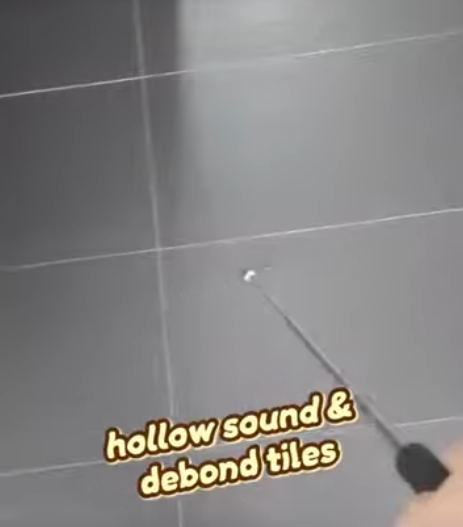
You tap your wall and hear it…
“kop kop” hollow sound.
At first, it feels harmless.
Until one day —
a tile suddenly cracks… or worse, drops.
In Singapore homes, especially older HDBs,
this is not just a cosmetic issue.
It’s a safety risk waiting to happen.
? What’s Really Happening Behind the Tiles
Hollow tiles mean the bond between tile and wall has failed.
Common causes in Singapore:
- ? Moisture trapped behind tiles (toilet/kitchen walls)
- ? Poor workmanship during installation
- ?? Aging adhesive losing strength over time
- ?? Thermal expansion due to humidity and heat
?? Why It Gets Worse
- Air gaps expand behind tiles
- More tiles become hollow
- Tiles start cracking or loosening
- Eventually ? tiles may pop or fall off
? Cost Breakdown (Singapore 2025–2026)
| Method | Estimated Cost |
|---|---|
| Spot tile repair | $200 – $600 |
| Tile overlay | $600 – $1,500 |
| Full hack & re-tile | $2,000 – $5,000+ |
| ? Convert to plastering | $300 – $1,200+ |
Hidden Costs You May Miss:
- Disposal fees for hacked tiles
- Waterproofing redo (toilet walls)
- Repainting entire wall
- Labour for uneven surface correction
? Choosing the wrong method = double cost later.
? Common Homeowner Mistakes
- Ignoring hollow sound until tiles fall
- Doing partial patch repairs repeatedly
- Choosing overlay without fixing base issue
- Thinking plastering is “cheap shortcut”
- Hiring based on lowest price instead of method
?? Best Solution: Convert Hollow Tile to Plastered Wall
Instead of chasing tile repairs,
many homeowners now choose conversion to plastered wall.
Step-by-Step Process:
? Identify and hack hollow / loose tiles
? Remove adhesive residues
? Level and treat wall surface
? Apply cement plaster (smooth finish)
? Sand and prepare for paint
? Repaint to match existing wall
? Comparison: Which Option Is Better?
| Option | Pros | Cons |
|---|---|---|
| Repair | Cheap | Temporary |
| Overlay | Faster | Adds weight, risk remains |
| Hack & Retile | Brand new | Very expensive |
| ? Plaster Conversion | Cost-effective, clean look | Not tiled finish |
? When Plastering Makes Sense:
- Large area of hollow tiles
- No need for tile aesthetics
- Want long-term stability
- Budget-conscious repair approach
? Expert Insight
? More than 70% of hollow tile cases we see could have been avoided with proper bonding during original installation.
Once bonding fails,
repairing tile-by-tile becomes inefficient.
?? Real Singapore Cases
“Tap here hollow, tap there also hollow…”
“Repair few tiles already, next month another side pop.”
“Overlay done before, now still got hollow sound behind.”
Before vs After
Before:
Hollow sound, risk of tile dropping, uneven wall
After plaster conversion:
Solid wall, smooth finish, no more hidden gaps
?? 9reno Experience
From our on-site experience at 9reno:
- Many homeowners only act after tiles fall
- Overlay jobs often hide the problem, not solve it
- Plaster conversion is increasingly chosen for practical, long-term results
We always assess whether repair, overlay, or conversion makes the most sense — not just push for the most expensive option.
? Need Help by 9reno ?
If your wall already sounds hollow,
don’t wait until tiles start dropping.
? WhatsApp us for a non-obligation assessment
We’ll advise if plaster conversion is the right solution for your home.
? Fix the root problem — not just the surface.
?FAQ
Q1: Are hollow tiles dangerous?
Yes — they can crack or fall, especially on wall surfaces.
Q2: Can I just ignore hollow tiles?
Not recommended. The issue usually spreads over time.
Q3: Is plastering better than re-tiling?
Depends — plastering is more cost-effective if tiles are not required.
Q4: How long does plaster conversion take?
Typically 1–3 days depending on area size.
Q5: Will plaster crack over time?
If done properly with good base prep, it is stable and long-lasting.
Q6: Can all tiled walls be converted to plaster?
Most can, but site inspection is needed.
? Other Services by 9reno
You may also be facing related issues:
- Bathtub Resurfacing
- Toilet Waterproofing Solutions
- Spalling Concrete Repair
- Silicone Sealant Renewal
- Ceiling Leak Repair
- Reinstatement work
?
Tags
hollow tile repair singapore, tile popping issue sg, wall plastering singapore, tile removal plaster wall, hdb wall repair, renovation defects singapore, 9reno
? BONUS: Quick Self-Check
- Does your wall sound hollow when tapped?
- Are there cracks or loose tiles forming?
- Is the hollow area spreading?
- Have you repaired tiles before but problem returns?
? If yes, plaster conversion may be the smarter long-term solution.
?? What Happens If You Ignore This?
- Tiles may suddenly detach (safety hazard)
- Repair cost increases significantly
- Moisture damage spreads internally
- Full hacking becomes unavoidable
Leave a Reply